
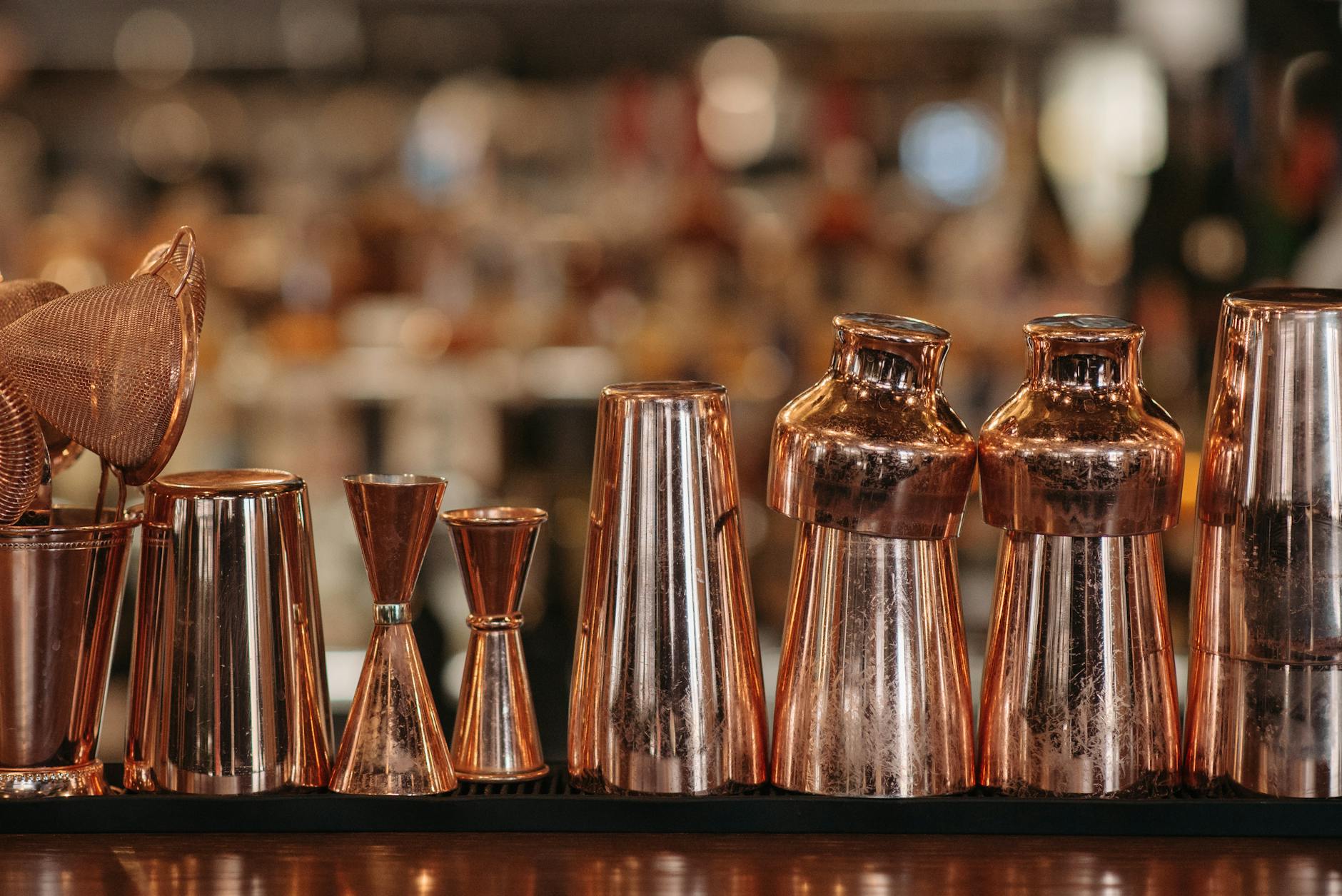

Bartending, an art steeped in history and skill, comes with its own unique language that can be both intriguing and bewildering to the uninitiated.
From the precise “jigger” to the casual “on the rocks,” understanding bartending jargon is essential for anyone looking to master the craft of cocktail making or simply to order with confidence at their local bar.
Terms like “muddle” and “garnish” describe the actions and additions that transform simple ingredients into sensory experiences.

The language of bartending is as much about the culture as it is about the cocktails themselves, reflecting a world where precision meets creativity.
Whether you’re a seasoned mixologist or a curious enthusiast, delving into the lexicon of bartending can enhance your appreciation of the cocktail-making process and the rich traditions behind each term.
Basic Terms
Build: To make a drink starting with ice and then systematically adding the other ingredients to build the cocktail.
Burnt: Refers to the burnt martini, a martini with a small bit of Scotch added; some recipes call for 1:2 scotch to gin, while others call for just a few drops of Scotch.
Call drink: A drink ordered with both the specific liquor name and the specific mixer name, e.g., Jack and Coke, Tanqueray, and tonic.
Chaser: Anything consumed immediately after a shot or neat drink.
Chill: To add ice to a glass or place a glass in a freezer or cooler briefly, so a cocktail can be poured into a cold glass.
Cooler: An alcoholic-based bottled beverage offered in a variety of different alcohols—vodka, rum, wine—which comes in a variety of flavors (e.g. Smirnoff Ice, Wildberry cooler, Mike’s Hard Lemonade).
Dash: A few drops of an ingredient.
Dirty: The addition of olive juice to a martini.
Double: A drink with double the amount of alcohol as the standard recipe calls for.
Dry: The reduction of vermouth in a martini.
Finger: An antiquated unit of measurement, equal to the width of a person’s finger.
Flame: Setting a drink on fire; Sambuca is often lit on fire to heat it up before putting the flame out and drinking it. Another common flaming liquor is 151-proof rum, which is very flammable. Do not flame drinks unless you’re a trained professional.
Float: A liquor, mixer, or syrup that is slowly poured on top of a drink to create layering.
Free pour: Pour liquor directly into a glass without using a jigger or shot glass to measure the quantity; often done by experienced bartenders who can count on accurate pours.
Build drinks: Often highballs, these are drinks that are “built” in the glass. This includes drinks like Scotch and soda, gin and tonic, and vodka sodas.
Call: The opposite of well drinks. These are drinks ordered by calling out a specific brand of liquor, e.g. Tanqueray and tonic, or Espolón and grapefruit.
Dry shake: To shake a drink vigorously and without ice. Commonly used for cocktails that incorporate eggs.
Dry: Unlike wine, where dry functions as the opposite of sweet, in cocktails it simply refers to the flavor of the primary alcohol in relation to lower-proof ingredients. A dry drink is not necessarily less sweet than a not dry drink, it will just taste more powerfully of ethanol.
Fizz: Sour drinks with the addition of seltzer/soda water. May or may not also include egg white.
Free pour: A technique of pouring alcohol directly into the glass, possibly with use of a speed pourer, rather than measuring exactly with a jigger. Can mean a heavier pour if the bartender likes you or counts slowly.
Highball: Drinks served in tall, straight-sided highball or Collins glasses. These generally include a spirit and non-alcoholic mixer. The narrowness of the glassware, in comparison to the rocks glass, makes it preferable for drinks with carbonated mixers, as the reduced surface area cause them to retain effervescence longer before they become flat.
Last call: The last chance to order a final drink before the bar closes.
Martini: Traditionally a formulation of gin, vermouth and sometimes a dash of bitters, it unfortunately began to be used as a catch-all phrase that encompassed any cocktail served in a V-shaped martini glass.
Martini, no vermouth: See “Up.”
Neat: Two-ounce pour of liquor, served room temperature and without ice.
Rocks: Ice. An order “on the rocks” is served over ice.
Rock’s glass: A short, round tumbler that, ironically, is also the preferred glass for neat pours.
Shooter: A cocktail, meaning a drink including multiple parts, but served in a shot glass and meant to be consumed in a single gulp. Generally terrible.
Shot: Like a neat pour, but usually slightly smaller at one and a half ounces, and served in a shot glass, because savoring the aroma isn’t really the point here.
Snapping: What one should never do with their fingers to signal a bartender.
Sour: This could mean an entire family of drinks that include all cocktails made with lemon or lime juice. Specifically, when preceded by a type of spirit (e.g., whiskey sour, gin sour) it’s a formulation of spirit + lemon juice + simple syrup/sugar. In the long-gone era of the 1990s, and some lower-end bars today, it may also mean a drink that includes “sour mix,” a poor approximation of real lemon juice and sugar.
Stir: One of the primary methods of mixing and chilling a drink, along with shaking and building, stirring is usually the preferred technique for drinks comprised entirely of spirits, with no fruit or citrus juices. The aim is for less agitation of the ingredients, and controlled water dilution.
Straight up: Unlike drinks served “up,” which are chilled, this term is primarily used by customers, rather than bar staff, and just means a neat pour.
Top shelf: An outdated term meant to imply more expensive, higher-quality liquor. It is generally not applicable in practice, as most large bars organize their shelves by function and frequency of use, rather than price. Also, the only shelf a bottle of Galliano ever seems to fit on.
Up: A drink chilled by shaking or stirring with ice but strained and served in a glass without ice.
Well: Also called the “house” liquor, this is the bar’s default bottle when no specific spirit brand is requested. Unfortunately assumed by many to mean the worst/cheapest liquor in the bar, it can also be where the bartender stocks hidden gems and lesser-known, undervalued standouts that were found at a good price.


Leave a Reply